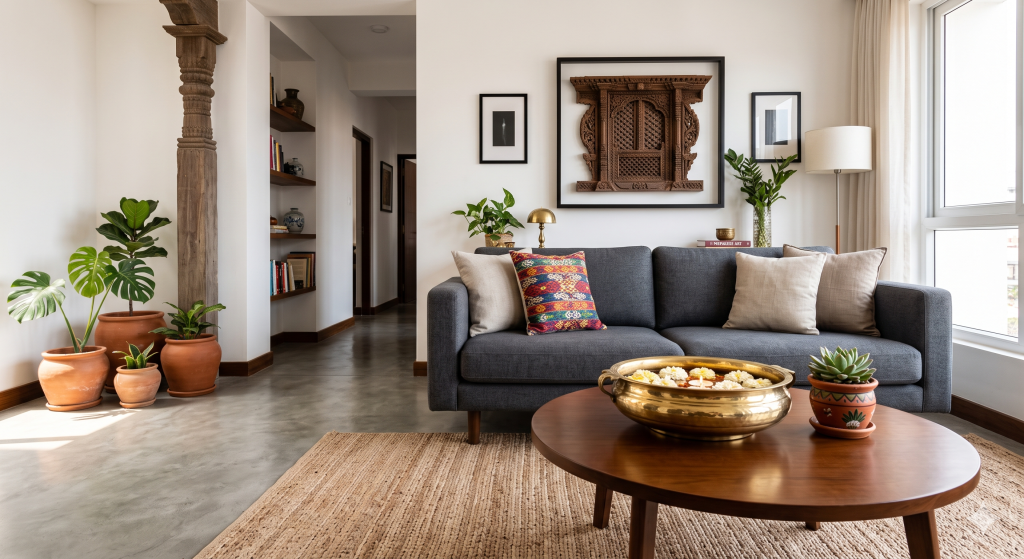
Over the last 8 years at Interior Design Nepal (IDN), we have seen the country’s design landscape evolve beautifully. From corporate makeovers in Kathmandu to contemporary residential transformations in Lalitpur and Pokhara, one question consistently comes up from homeowners: “Can we achieve a high-end, premium aesthetic without an astronomical budget?”
Our answer after nearly a decade of handling diverse projects across the country is always a resounding yes.
True luxury isn’t about importing flat-packed, commercial furniture. In fact, the absolute best trick for elite interior design in Nepal is sitting right in our backyard—hidden in the historic alleys of our local bazaars. By blending modern space planning with authentic, hyper-local elements, you can create a magazine-worthy home that feels uniquely yours.
Here is IDN’s official guide to styling a high-end Nepali home using budget-friendly local bazaar treasures.
The IDN Framework: The “High-Low” Strategy
In our 8 years of staging premium homes, we’ve perfected a golden rule: Invest in the bones, source the soul locally.
To avoid a space feeling overly cluttered or cheaply put together, try this balance:
- The “High” (Foundational Elements): Put your budget toward high-use, structural necessities. Invest in professional space layout, high-quality wall finishes, and a sleek, clean-lined modern sofa.
- The “Low” (Artisanal Accents): Look to local craftsmen and street bazaars for your textiles, statement pieces, and heritage decor.
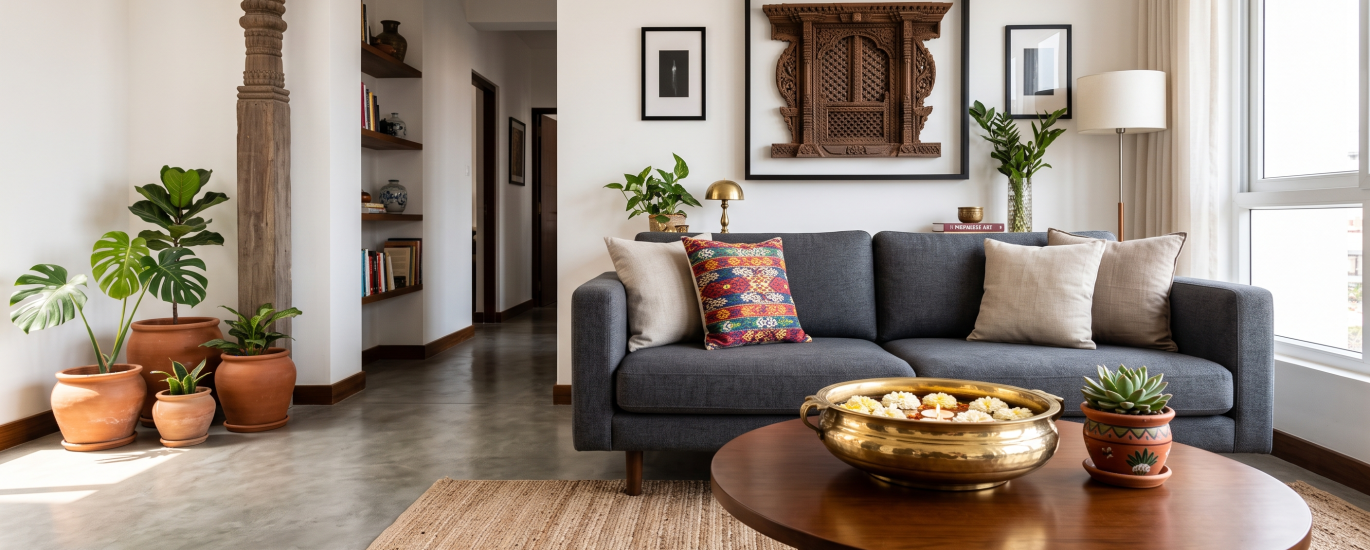
When you place a beautifully aged, hand-hammered brass vessel on top of a crisp, modern minimalist coffee table, the contrast creates an instant “designer look” that exudes luxury.
IDN’s Bazaar Scouting Guide: What to Buy & Where
To find pieces that elevate your space rather than crowd it, you have to know exactly what to look for when hunting through local markets.
🏺 Statement Brassware and Vintage Copper
- Where to source: The historic metalsmith lanes of Mangal Bazaar (Patan) or the old quarters of Bhaktapur.
- The Luxury Trick: Look for oversized traditional water vessels (anti), vintage oil lamps (sukunda), or wide brass urli bowls. Instead of using them traditionally, give them a brilliant polish and place them as modern centerpieces. A giant brass bowl filled with floating flowers or candles on a low-profile table reflects light beautifully and mimics the decor found in 5-star boutique hotels.
🪵 Reclaimed Wood and Terracotta Accents
- Where to source: Local pottery squares and old woodworking shops around Bhaktapur or Thimi.
- The Luxury Trick: Ask local woodcarvers for salvaged pieces of old carved window frames or pillars. At IDN, we love mounting a single piece of weathered Newari lattice woodwork onto a pristine, neutral wall as a striking piece of 3D architectural art. Pair this heavy wood with raw, matte clay pots holding vibrant indoor plants like Monsteras or Snake Plants to achieve a fresh, organic luxury vibe.
🧶 Authentic Textiles and Allo (Nettle Fiber)
- Where to source: Fair-trade handloom cooperatives in Kupondole or traditional cloth merchants in Asan.
- The Luxury Trick: Skip the mass-produced synthetic throws. Seek out hand-loomed Dhaka accents or raw, sustainable Allo (giant nettle fiber) textiles. A massive, textured Allo rug used as the grounding base for your living room setup adds immense tactile depth, making the entire room look custom-built.
Styling Cheat Sheet: Making Local Finds Look Expensive
Buying a stunning artisanal piece is only half the battle. How you style it dictates whether it looks like chaotic clutter or high-end curation.
| The Bazaar Find | The Common Mistake (Looks Cheap) | The IDN Designer Approach (Looks Luxurious) |
| Traditional Brass Urli | Placed haphazardly on the floor in a dark corner. | Set prominently on a modern table, filled with clean water and fresh blossoms. |
| Hand-loomed Dhaka Fabric | Draped loosely over an outdated armchair. | Stitched into sleek, custom accent pillows paired against solid, neutral-colored cushions. |
| Terracotta Clay Pots | Small pots scattered randomly across a windowsill. | Clustered together in a tight group of three varying heights in a well-lit corner. |
💡 Pro Tip: Leverage the Power of Negative Space
One major takeaway from our 8 years in the industry is that luxury thrives on “breathing room.” If you pick up a few gorgeous clay pots from Thimi, do not crowd them onto a single crowded shelf. Display two, and leave the surrounding space completely empty. This forces the eye to instantly appreciate the shape, texture, and craftsmanship of the object.
Celebrating Nepali Craftsmanship
Designing a spectacular home shouldn’t require an international shipping fee. By utilizing the incredible wealth of artistry in our local bazaars, you aren’t just saving money—you are supporting local artisans, reducing your carbon footprint, and weaving real cultural history into your everyday living space.
Let’s change the narrative around home design. Look past the everyday hustle of Patan or Asan, and you’ll find the textures and stories waiting to transform your house into a gorgeous, soulful sanctuary.
💬 Let’s Connect!
Are you planning a home refresh this season? Which local elements are you most excited to bring into your space? Let us know in the comments! If you want professional guidance on layout and space execution, get in touch with the IDN team today.